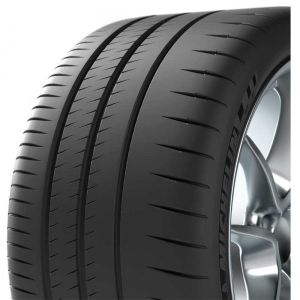
These tyres are made for the driver who takes their sports car or hot hatch to a track day and wants to wring everything out of every corner. Track tyres are summer performance tyres with a soft, sticky compound and an almost slick tread - they grip the road best on warm, dry asphalt once the rubber has warmed up. They are not suited to everyday driving or winter. Below you will find the models available in our catalogue for large rims.
Track tyres
Summer performance tyres for maximum grip on a dry, warm track - aimed at track-day and motorsport drivers.
6 tyre models available




Track tyres: who they're for and how to choose
The first question we ask in the shop: how will the car get to the track? A driver who drives the car to the circuit themselves and returns home in the evening is usually best served by a "street" extreme-performance tyre with a UTQG treadwear rating of around 200 - it still behaves predictably on the road, yet grips far better on track than an ordinary summer tyre. If the car is taken to the track on a trailer and only ever raced, a more aggressive semi-slick or R-compound is the right choice, already very close to a full slick.
In our catalogue this segment is represented by performance models from Pirelli, Michelin and Goodyear for large rims - diameters from R17 to R22 inches. Most sizes carry the XL marking, because on track the casing takes a heavy load, and most models come with factory OE homologation.
- Choose the grade to match your use. A true R-compound only suits a dedicated track car or racing; if the car drives to the track and back itself, a 200-treadwear tyre is almost always more practical.
- Load index and speed rating. Make sure the load and speed ratings meet the factory requirements or exceed them - on track the load on the tyre is higher than in everyday use.
- Expect rapid wear. The soft compound wears quickly; depending on use, a set lasts anywhere from a few thousand to a couple of tens of thousands of kilometres, and aggressive track use wears it down even faster.
- The tyre needs to warm up. Cold track tyres grip unpredictably, so warm them up before driving fast; in cool weather, roughly below +15 degrees, grip drops sharply.
- When not to choose them. For everyday comfort and fuel economy, UHP or ordinary summer models are better - a track tyre is a niche product, not an all-round tyre.
Not sure which grade suits your car? Send us the size and how you plan to use it and we'll help you choose.
Frequently asked questions
Sports cars and supercars, hot hatches and track-prepared saloons or coupés with a stiff chassis and enough power. They are not meant for everyday and family driving - UHP or ordinary summer tyres serve better there.
Many semi-slick and R-compound tyres carry a DOT or E marking and are technically road-legal, but the manufacturer declares them as 'competition' - not for everyday use. Full slicks with no tread are not permitted on public roads.
Not recommended. The almost slick tread channels water poorly, so even in light rain the risk of aquaplaning rises quickly and braking distances get longer.
No. Track tyres carry neither the M+S nor the 3PMSF marking, but in Latvia, during the winter period from 1 December to 1 March, an Alpine (3PMSF) tyre with at least 4 mm of tread is mandatory, and since 1 October 2024 M+S alone is no longer acceptable. In cold, wet weather these tyres are dangerous.
Track tyres have a softer compound and less tread, so they grip better on a dry track, but wet grip is weaker and they wear faster. The UTQG treadwear number (for example, around 100-200 versus 300-400 for ordinary performance tyres) shows a ratio against a reference tyre, not mileage in kilometres, and it can only be reliably compared within a single manufacturer.
Heat cycles are the tyre's heating and cooling cycles. On the most aggressive compounds, peak grip lasts for only a limited number of cycles, sometimes around five, and then gradually falls off, even if the tread is still in good shape.
Special tyre categories
Niche tyre segments for specific applications - from all-terrain and sports tyres to seasonal and technology-focused tyres.